
What business can learn from air traffic control about experience
While many companies see demographic change as a staffing issue, DFS Deutsche Flugsicherung treats it as a question of knowledge transfer. In safety-critical air traffic control, experience becomes a strategic asset for training, innovation and resilience.
It is a hot and humid early summer’s morning at the air traffic control centre on the outskirts of Frankfurt. Storm fronts are moving across Western Europe, and more and more aircraft are having to be rerouted in German airspace. The radar screens are showing increasingly dense flight paths.
“You can train a lot of things,” says air traffic controller and instructor Damaris Schröder. “But some situations – a thunderstorm for example – require experience to know how to handle them, by exchanging knowledge with colleagues who have been through them before.” Modern aviation is more than technology. When standard procedures reach their limits, experience becomes the decisive factor. In safety-critical systems such as air traffic control, this kind of tacit knowledge can make the difference when standard procedures no longer fully apply.
You can train a lot of things. But some situations – a thunderstorm for example – require experience.
Around 100,000 flights take off and land worldwide every day. German airspace is one of the busiest and most complex in the world. Here, safety comes from technology, clear procedures and people who stay on top of the situation, even under extreme pressure.
DFS Deutsche Flugsicherung is Germany’s air navigation service provider, responsible for managing air traffic safely and efficiently in one of the world’s busiest airspaces.
“There is invaluable implicit contextual knowledge,” says Jörg Buxbaum, Group Leader Research & Foresight at DFS Deutsche Flugsicherung. Experienced air traffic controllers often recognise patterns, bottlenecks and specific features in the part of airspace they manage, known as a sector, before automated alarm systems are triggered. Understanding how this experiential and tacit knowledge can lead to better decisions, procedures and technologies has long been a focus for DFS.
-

Frankfurt Airport is one of Europe’s busiest aviation hubs. The surrounding airspace is managed from DFS Operations Langen. © DFS Deutsche Flugsicherung
-

Entrance to DFS Operations Langen, a key site for German air traffic control.
-

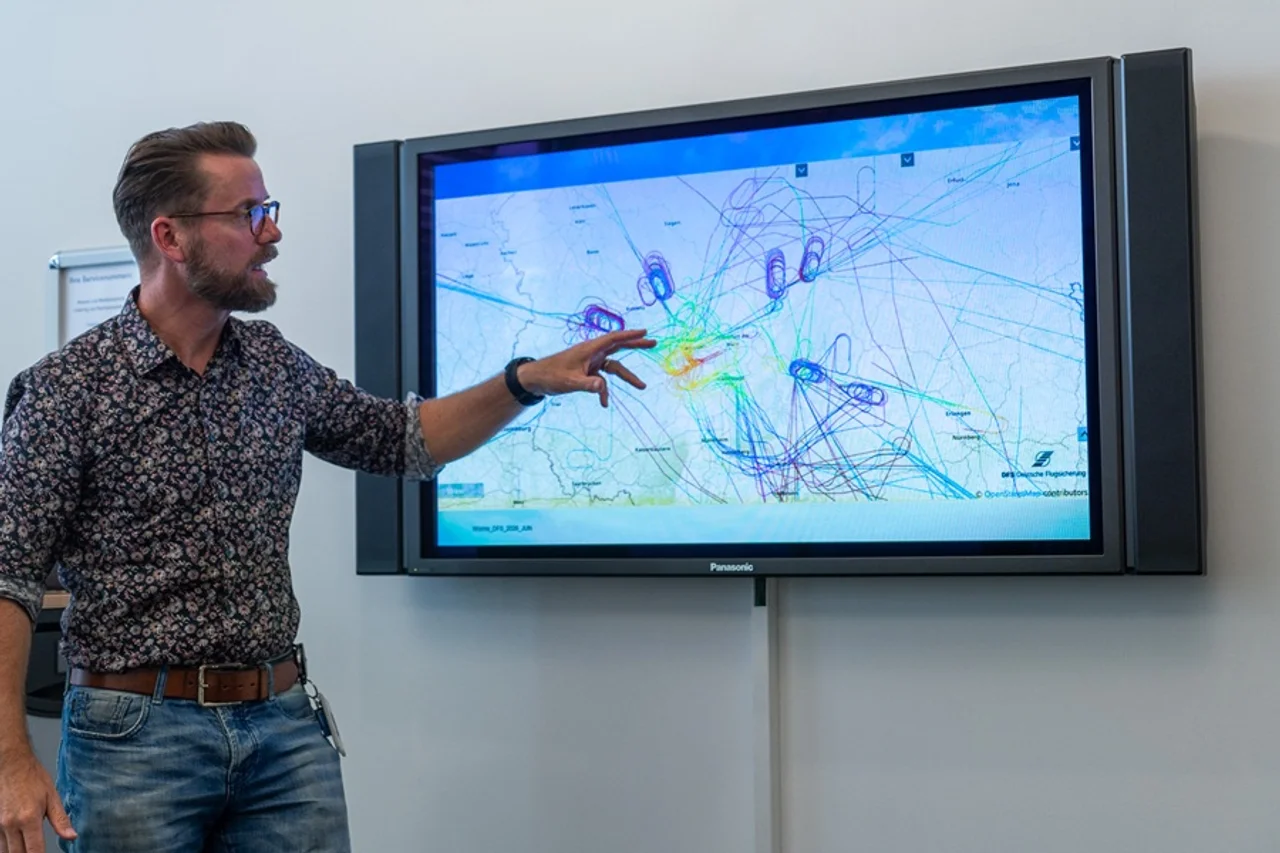
Map of the airspace over Germany, showing the complexity of one of the world’s busiest aviation regions.
-

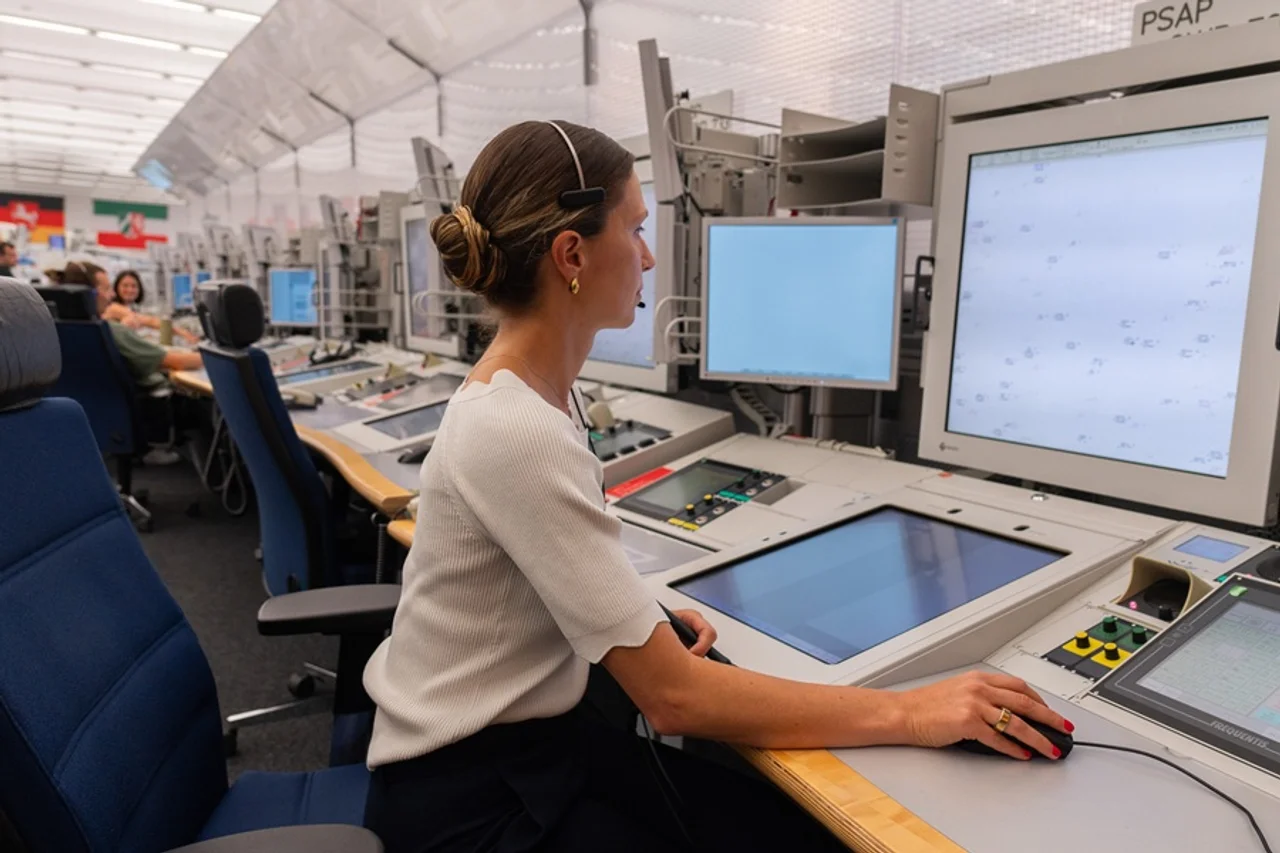
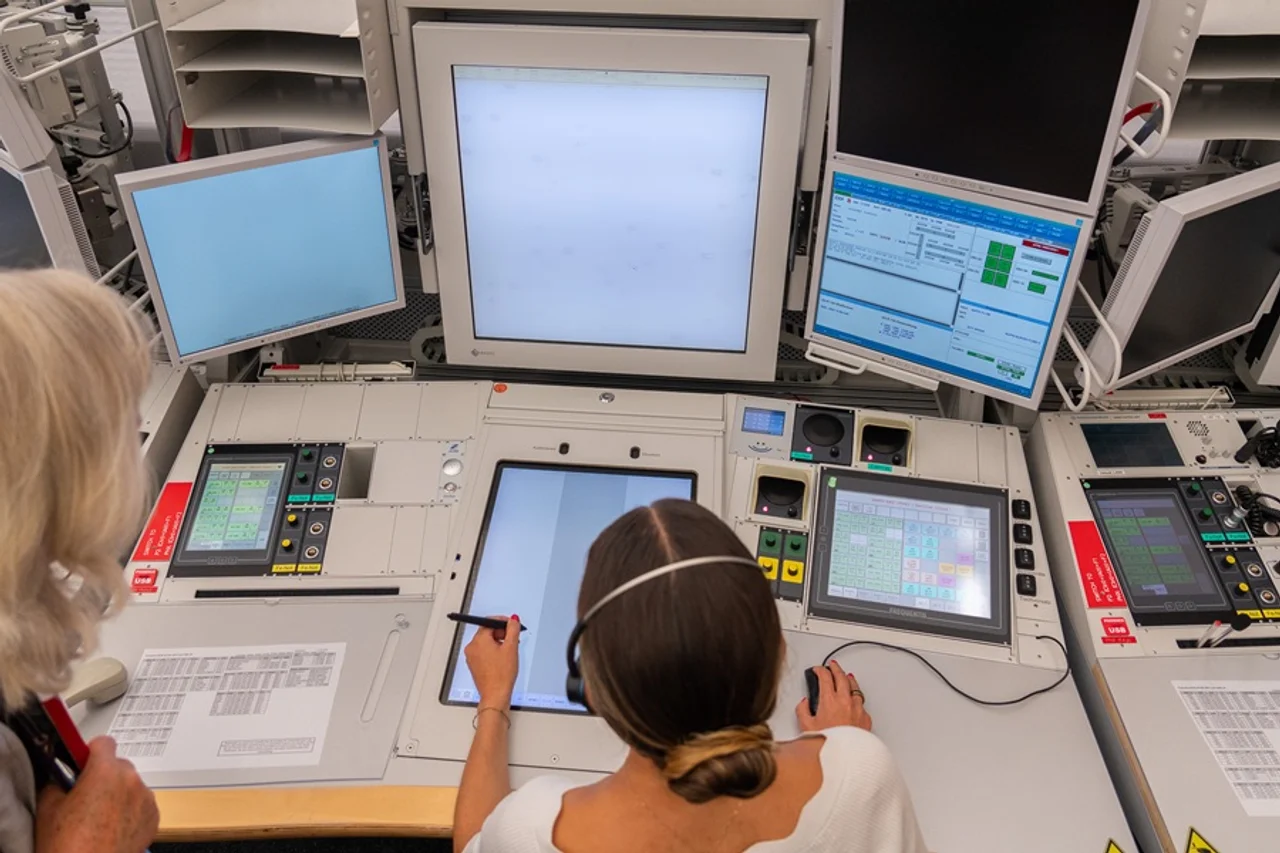
Active DFS controllers manage live traffic and train colleagues in the control room. © DFS Deutsche Flugsicherung
-

Inside DFS Operations Langen, a key site for German air traffic control.
-

Dr Gerolf Ziegenhain in conversation at DFS about experience, knowledge transfer and innovation in air traffic control.
-

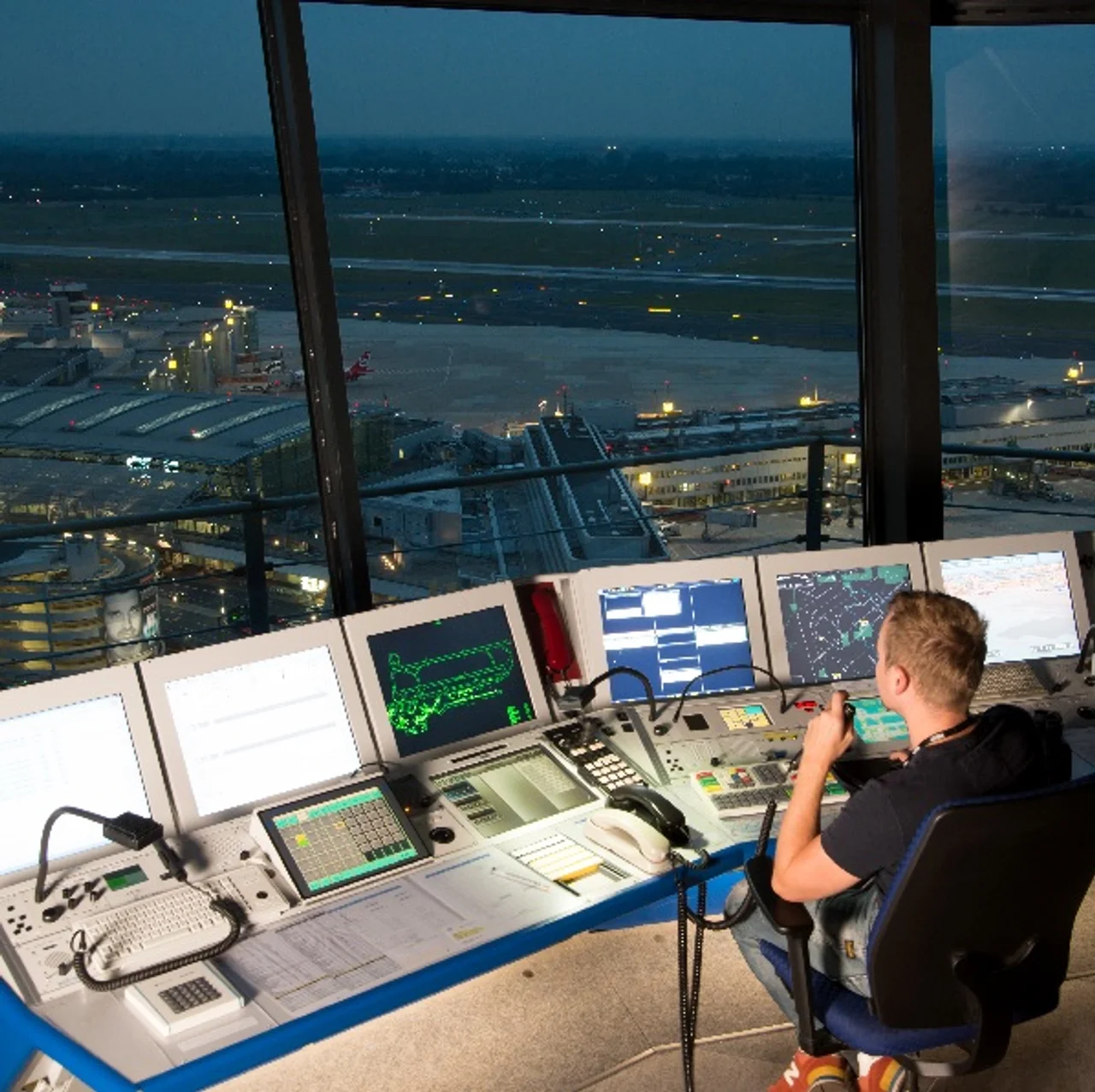
Air traffic control at Düsseldorf Airport: from the tower, DFS controllers monitor aircraft movements and manage traffic safely on the ground and in the air. © DFS Deutsche Flugsicherung
-

Dr Gerolf Ziegenhain, Director of Innovation and Planning at DFS Operations, sharing insights at the company's headquarters in Langen.
-

DFS remote tower control enables air traffic management from a digital control centre. © DFS Deutsche Flugsicherung
Why does experience matter in air traffic control?
Air traffic controllers usually leave active operational service earlier than people in many other professions.
Many, however, stay on as instructors, or they share their experience in research projects or in the development of new systems.
“The staff turnover rate across the entire operation is only 0.8 per cent. Many air traffic controllers stay with DFS for decades. And even after active service, many continue to contribute their knowledge,” says Jörg Buxbaum. “The notion of older employees being a burden simply doesn’t cross our minds. Passing on experience while allowing space for new perspectives – that mix is what makes DFS successful,” says Dr. Gerolf Ziegenhain, Director Planning & Innovation.
For DFS, an ageing workforce is not primarily a risk, but a source of operational knowledge that needs to be shared deliberately.
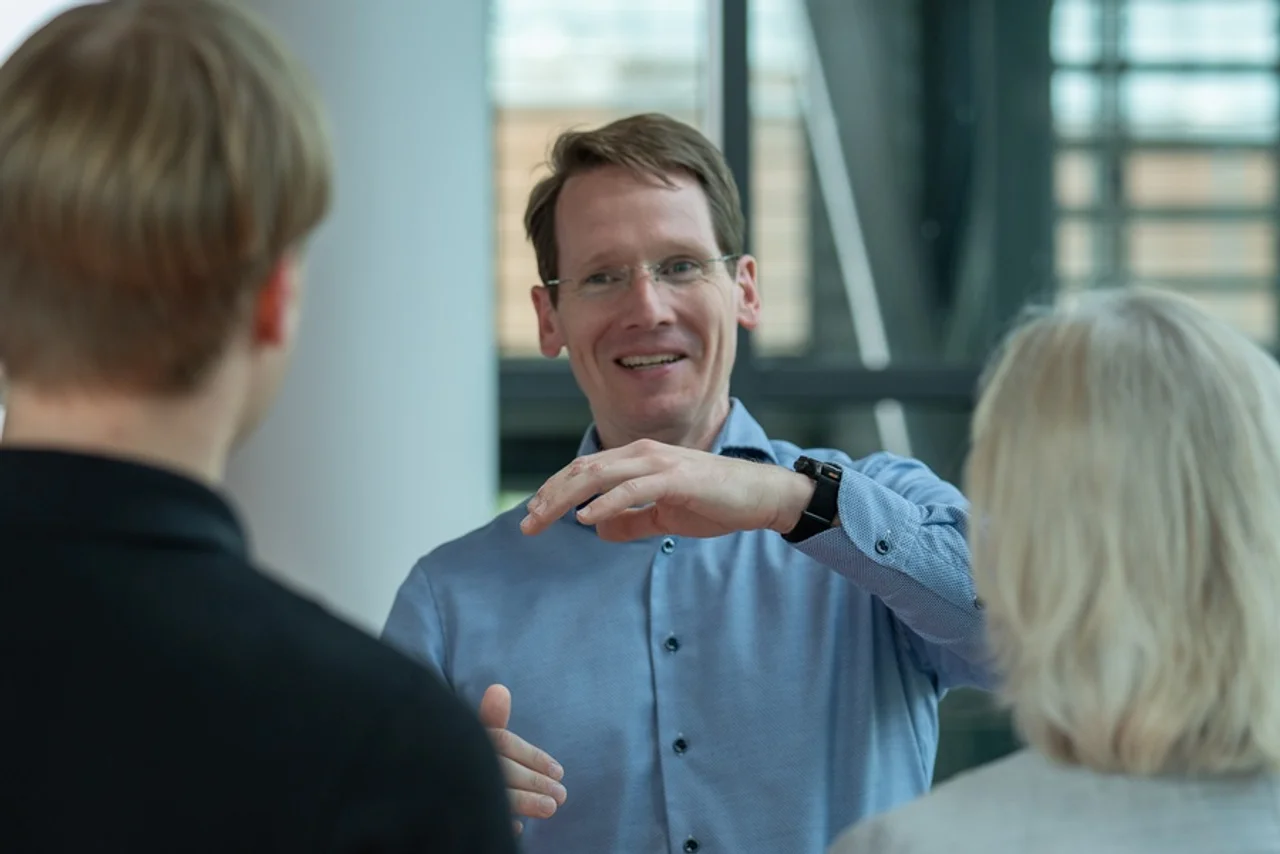
The notion of older employees being a burden simply doesn’t cross our minds. Passing on experience while allowing space for new perspectives – that mix is what makes DFS successful.
How does DFS transfer knowledge between generations?
Training is one area in which it is especially clear just how practical knowledge and new perspectives combine. While learning procedures and rules, future air traffic controllers also experience how to make decisions in highly complex situations. Things they learn in the control room today may already be part of simulations, training systems or the next generation of technical solutions tomorrow.
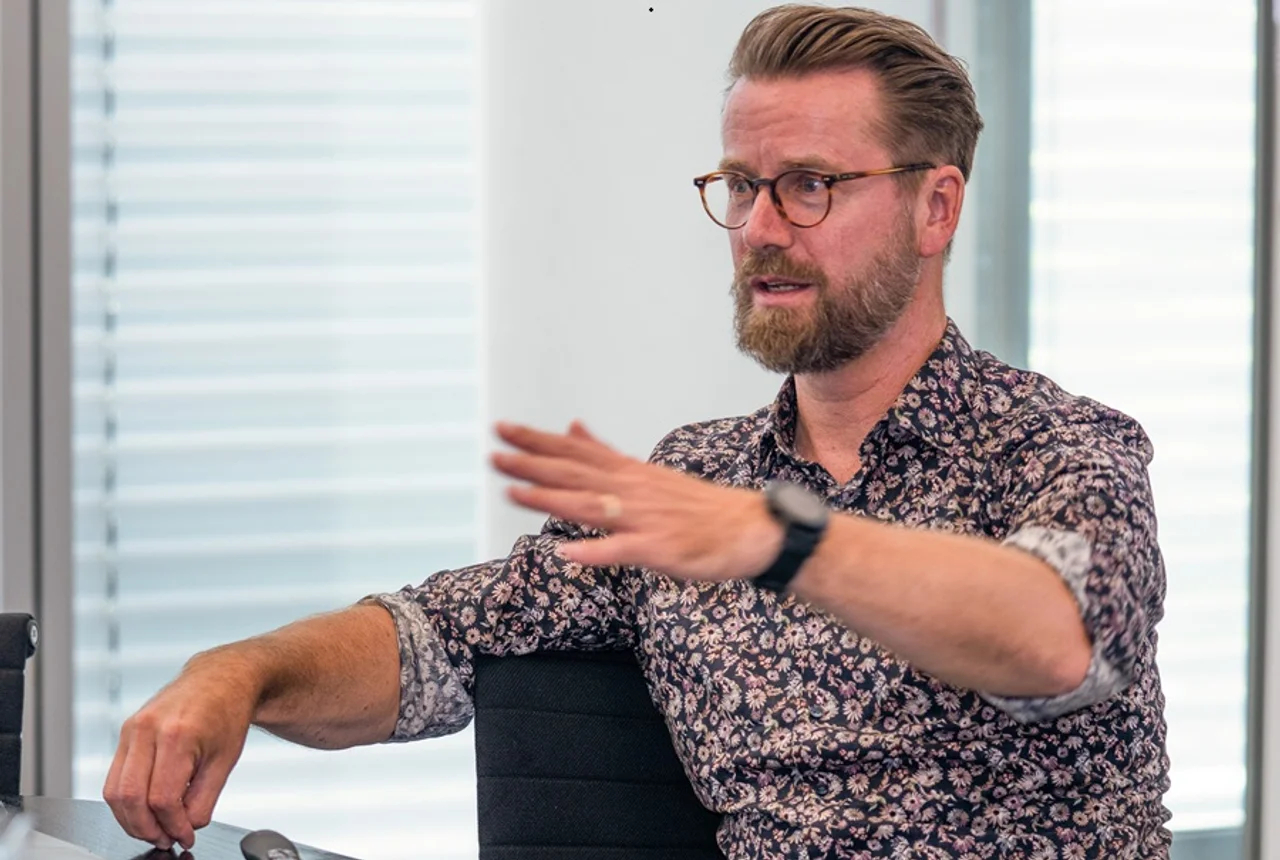
“When new systems are introduced, experienced colleagues learn from younger colleagues just as much as the other way round. One side brings deep operational knowledge, the other a very intuitive way of working with new technologies,” says Jörg Buxbaum. This two-way knowledge transfer helps DFS combine operational expertise with new digital skills.
When new systems are introduced, experienced colleagues learn from younger colleagues just as much as the other way round.
Mistakes as raw material: “Just Culture”
This is made possible by a culture that focuses on learning rather than blame: the so-called Just Culture. Employees can openly address mistakes, uncertainties or near misses without having to fear sanctions. The aim is not to find someone to blame, but to learn as an organisation. Especially in an environment where rare exceptional cases can have serious consequences, every unexpected situation becomes an opportunity to improve the system. In safety-critical systems, a Just Culture turns mistakes and near misses into structured organisational learning.
”For us, Just Culture does not end in the control room. The willingness to share experiences openly and learn from them runs through all areas of DFS,” says Jörg Buxbaum.
Many innovations at DFS emerge from exactly this interplay between human experience and systematic data analysis. New procedures, training methods or technological solutions are not based on data or experience alone, but on the intelligent combination of both.
Why innovation still needs people
One thing DFS has learned is this: not every situation can be simulated. Even highly automated systems that have been developed, tested and validated over many years can encounter so-called corner cases in real-life operations – rare special situations that no test environment can fully reproduce. Extreme weather or local particularities often only reveal their challenges in day-to-day operations.
To test new procedures under conditions that are as close to reality as possible, DFS uses digital twins of its airspace. Over many years, active and former air traffic controllers have worked with researchers to develop models that make experience from everyday operations systematically usable. The result is safer processes, targeted relief for air traffic controllers and more efficient handling of growing traffic volumes. Optimised traffic flows can also shorten flight paths, reduce waiting times and save fuel. For DFS Deutsche Flugsicherung, digital twins are one way to translate tacit operational knowledge into testable scenarios.
Digital twin: the dress rehearsal for tomorrow’s airspace
A digital twin is a virtual replica of a real system. At DFS, this includes not only the airspace itself, but also traffic flows, procedures and what is known as workload – the pressure air traffic controllers face in real operations. This allows changes to be tested before they are used in live operations. It helps make risks visible early and test new procedures under realistic conditions.
What role does AI play in preserving human judgement and air traffic control experience?
AI, too, is becoming more important, but not where many might expect. In DFS’s view, people will continue to be the central decision-making authority in day-to-day air traffic control. The requirements for safety, transparency and human control are too high.
In air traffic control, AI can support analysis and documentation, but human decision-making remains central where accountability and safety are at stake. “For the foreseeable future, people will remain central in day-to-day air traffic control. We do not see AI’s greatest potential in the control room. Its greatest value lies in making knowledge visible, usable and permanently available,” says Gerolf Ziegenhain.
For the foreseeable future, people will remain central in day-to-day air traffic control.
For DFS, the strength of AI lies especially in areas where large amounts of data can be analysed, patterns identified or information made accessible more quickly. Through structured interviews, digital knowledge archives and intelligent document processing, DFS makes experiential knowledge available for the long term. In this way, AI becomes a tool for long-term knowledge transfer rather than a replacement for experienced controllers.
AI as an applicant for the control room
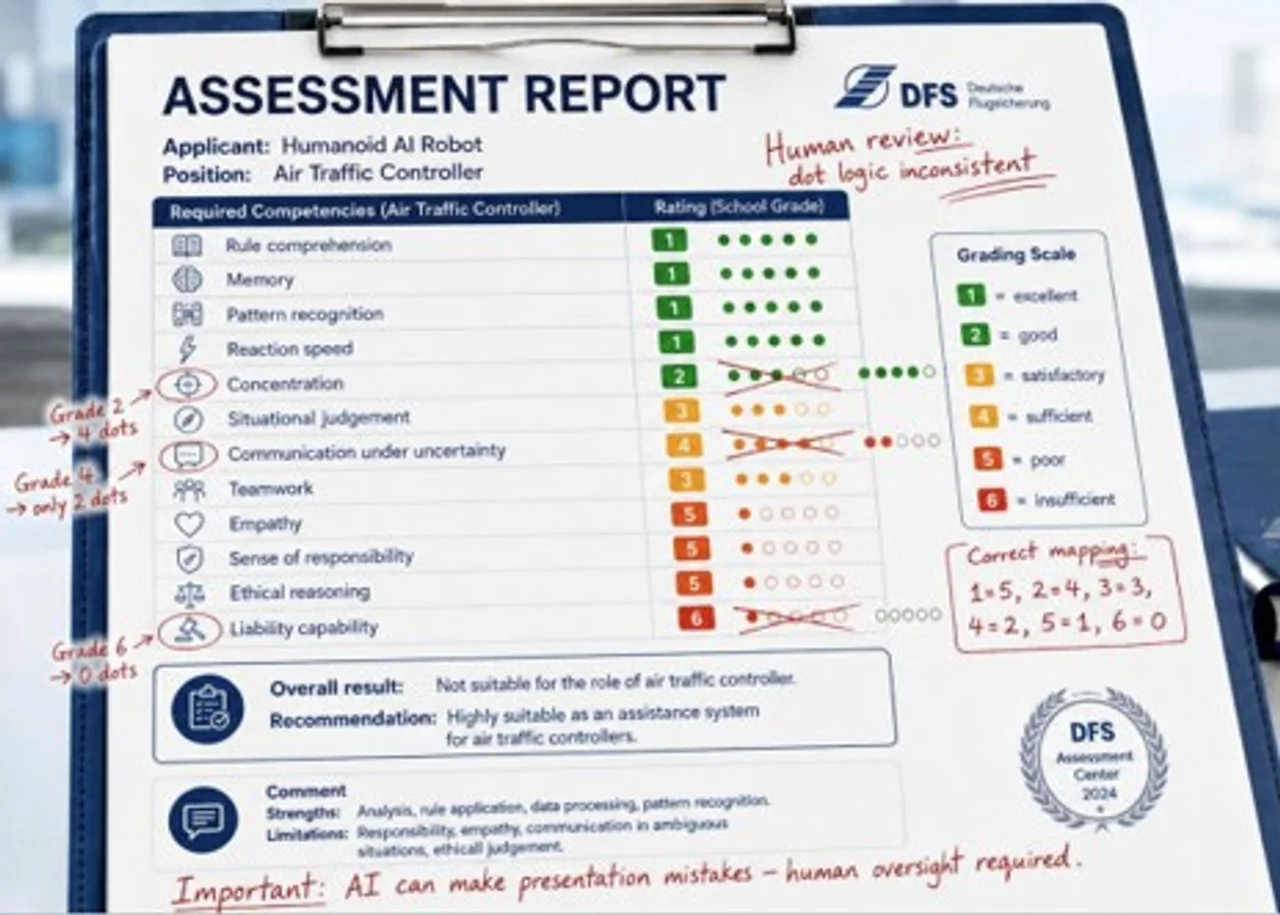
A playful but technically sound assessment centre for autonomous AI systems at DFS shows clear limits: AI solves many tasks faster than humans. But when it comes to responsibility, communication and decisions under uncertainty, people remain indispensable.
A new task for air traffic control: protection against drones
Drones are becoming an increasing challenge for airports and other critical infrastructure. Together with Deutsche Telekom and defence company Hensoldt, DFS is working on an AI-supported platform that automatically analyses sensor data and combines it into a clear picture of the airspace situation. The aim is to identify unauthorised or safety-critical drone activity earlier. For critical infrastructure such as airports, this extends the logic of air traffic control into new layers of airspace security.
Experience as critical infrastructure
The real innovation in air traffic control does not lie in a single technology, but in the insight that experience is part of the infrastructure – just as important as technical systems or physical facilities. It helps train new employees faster, develop innovations closer to real life and continuously improve processes. This benefits not only air traffic controllers, but the entire air transport system, from airlines and airports to passengers.
In an ageing society, this may be the answer to one of the most important questions of the future. The more complex systems become, the more important it is to preserve experience, pass it on and turn it into innovation. People cannot remain fully active forever. But their knowledge can. For companies facing demographic change, DFS shows that tacit knowledge and structured knowledge transfer can become a strategic advantage.
Deutsche Bank and DFS Deutsche Flugsicherung
Deutsche Bank supports DFS Deutsche Flugsicherung as a strategic partner in a highly regulated environment with particular requirements for liquidity management and risk management.
The focus is on allocating liquidity efficiently within strict regulatory parameters. Deutsche Bank develops tailored solutions for this. At the same time, it supports DFS in developing its treasury organisation further as international activities grow.
The partnership is built on a foundation of trusted dialogue and a shared commitment to combining financial stability with sustainable strategic development.
About DFS Deutsche Flugsicherung
DFS Deutsche Flugsicherung is Germany’s air navigation service provider and one of Europe’s key organisations for civil air traffic control. Around 2,200 air traffic controllers safeguard German airspace around the clock, 365 days a year. In one of the world’s busiest airspaces, DFS combines operational expertise, safety-critical infrastructure and technical innovation to manage air traffic safely, efficiently and as sustainably as possible.
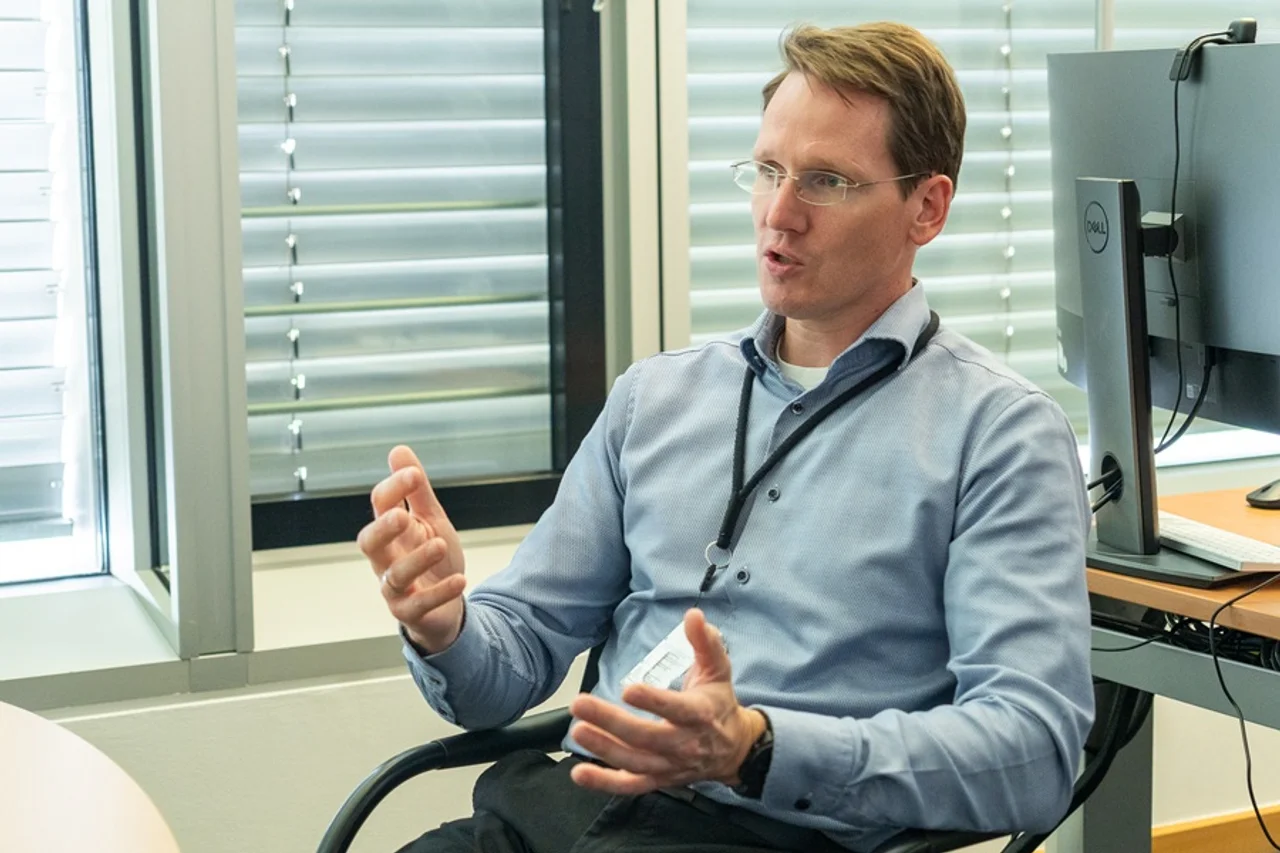
Dr Gerolf Ziegenhain
Dr Gerolf Ziegenhain, Director Innovation & Planning at DFS Deutsche Flugsicherung. The physicist with a doctorate works on the strategic development of air traffic control at the interface of technology, innovation and operations. Since 2010, he has held various leadership roles at DFS – from software development and IT platforms to air navigation services and innovation programmes. Today, he drives topics such as automation, knowledge management and the future of critical infrastructure.
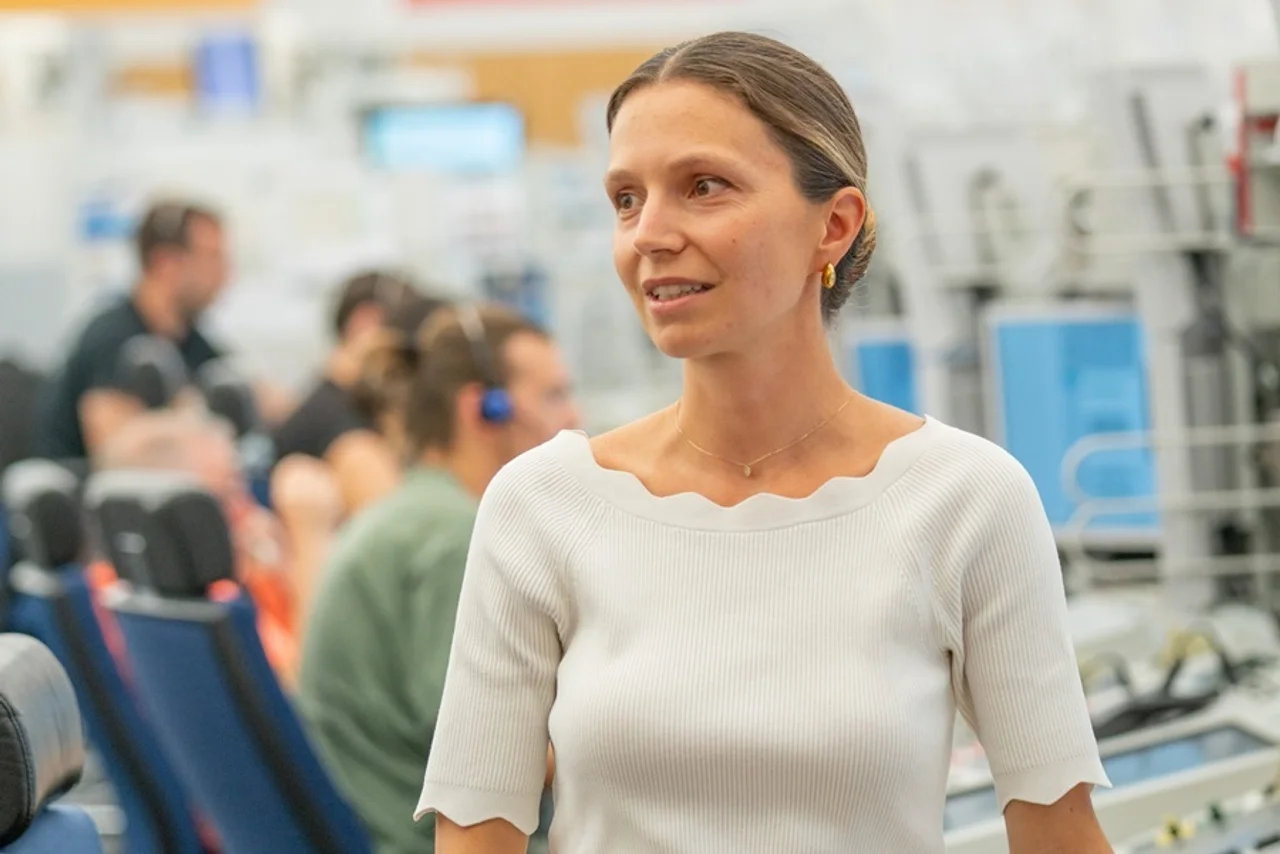
Damaris Schröder
Damaris Schröder has been an air traffic controller and instructor at DFS since 2017. In the control room and in the simulator, she supports the next generation and passes on experience from day-to-day operations. In this way, she helps ensure that valuable practical knowledge is not lost, but continuously shared and developed further.
Jörg Buxbaum
Jörg Buxbaum is a graduate engineer in aerospace engineering and has worked at DFS Deutsche Flugsicherung since 1999. As Group Leader Research & Foresight, he looks at how automation and artificial intelligence can effectively support air traffic controllers in safety-critical systems. His focus areas include new technologies and the transfer of practical knowledge in air traffic control.
This page was published in September 2026. Unless otherwise stated: photos by Benjamin Krug.

Philipp Scheller
… works at Deutsche Bank on communications, digital developments and new technologies, especially AI. He is interested in how people and organisations deal with change. His curiosity also regularly takes him to new countries and cultures in his private life.
Recommended content
Bold Entrepreneurship | Opinion
What if ageing is actually a growth story? What if ageing is actually a growth story?
Pedro Ros reveals why longer lives are creating one of the world’s most underestimated growth markets.
What if ageing is actually a growth story? Explore the Silver Economy
Bold Entrepreneurship | Video Story
How long does my money need to last? How long does my money need to last?
What if you live to 100 years – but your money doesn’t? As lifespans extend, financial planning has to change.
How long does my money need to last? Look ahead
Bold Entrepreneurship | Opinion
“Adapting to longer lives is as crucial as adapting to AI or climate change” “Adapting to longer lives is as crucial as adapting to AI or climate change”
Longer lives are reshaping economies and careers. Andrew J. Scott explains why the longevity revolution is just getting started.
“Adapting to longer lives is as crucial as adapting to AI or climate change” Why longer lives change everything